Understanding the Key Factors Behind Successful Wooden Toy Products
In today’s competitive toy market, creating a successful wooden toy requires more than simply choosing natural materials and attractive designs. For brands, retailers, and buyers, the real challenge is identifying products that can capture children’s interest, meet parents’ expectations, and achieve strong market performance.
A best-selling wooden toy is usually the result of a combination of five key elements:
Design + Function + Play Value + Packaging + Price Positioning
Understanding these factors can help us make better product decisions and build a stronger wooden toy collection.
1. Design: The First Impression That Drives Purchase Decisions
Great wooden toys start with thoughtful design.
Unlike digital toys that rely on screens and sounds, wooden toys attract consumers through their appearance, craftsmanship, and emotional connection. A successful design should balance aesthetics with play ability.
Key design elements include:
Timeless and Attractive Appearance
Modern consumers are increasingly looking for toys that fit naturally into their homes. Wooden toys with clean designs, soft colors, and simple shapes are becoming popular among families who value both play and home aesthetics.
Child-Friendly Design
A successful toy design considers:
- Age-appropriate size
- Easy handling for small hands
- Safe structures
- Comfortable interaction
Differentiation
With many products available in the market, unique design helps a product stand out.
Successful wooden toys often combine:
- Traditional play patterns
- Creative functions
- Modern visual styles
A strong design is not only about looking good — it creates the first reason for consumers to choose the product.
2. Function: Creating Real Value Beyond Appearance
A beautiful toy may attract attention, but functionality determines whether children continue playing with it.
The best-selling wooden toys usually offer meaningful interaction.
Examples include:
- Role play toys that encourage imagination
- Construction toys that develop problem-solving skills
- Activity toys that support multiple learning areas
- Puzzles that improve cognitive development
Products with multiple functions often create stronger retail value because they provide:
✓ Longer play time
✓ Higher perceived value
✓ Better customer satisfaction
A successful toy should answer one important question:
“What will children do with this toy again and again?”
3. Play Value: The Secret Behind Repeat Engagement
Play value is one of the biggest differences between an ordinary toy and a successful product.
Children are naturally attracted to toys that allow exploration, creativity, and open-ended play.
High play-value wooden toys often encourage:
Creativity
Children can create their own stories and play scenarios.
Imagination
Pretend play products such as kitchens, shops, and role-play sets allow children to explore different roles.
Skill Development
Many wooden toys support:
- Fine motor skills
- Coordination
- Logical thinking
- Social interaction
For buyers, strong play value means a product has a better chance of becoming a long-lasting favorite rather than a short-term purchase.
4. Packaging: Turning Products Into Purchase Decisions
Packaging is often the first communication between a product and the customer.
For retail buyers, packaging can directly influence sales performance.
Effective packaging should:
Communicate Product Benefits Clearly
Parents want to quickly understand:
- What the toy does
- What age it is suitable for
- Why it is valuable
Create Shelf Appeal
A good package helps products stand out in:
- Physical stores
- Online marketplaces
- Gift sections
Support Brand Positioning
Premium packaging can increase perceived product value and support higher price points.
A well-designed package does not simply protect the product — it helps sell the product.
5. Price Positioning: Finding the Right Market Balance
Even a great product needs the right price strategy.
Successful wooden toys usually have a clear position:
Entry Level
Affordable products that attract wider customer groups.
Mid-Range
Products with strong value, quality, and functionality.
Premium
Unique designs, sustainable materials, and higher craftsmanship.
For buyers, the goal is not always the lowest price.
The key is:
The best product is the one that delivers the strongest value compared with its price.
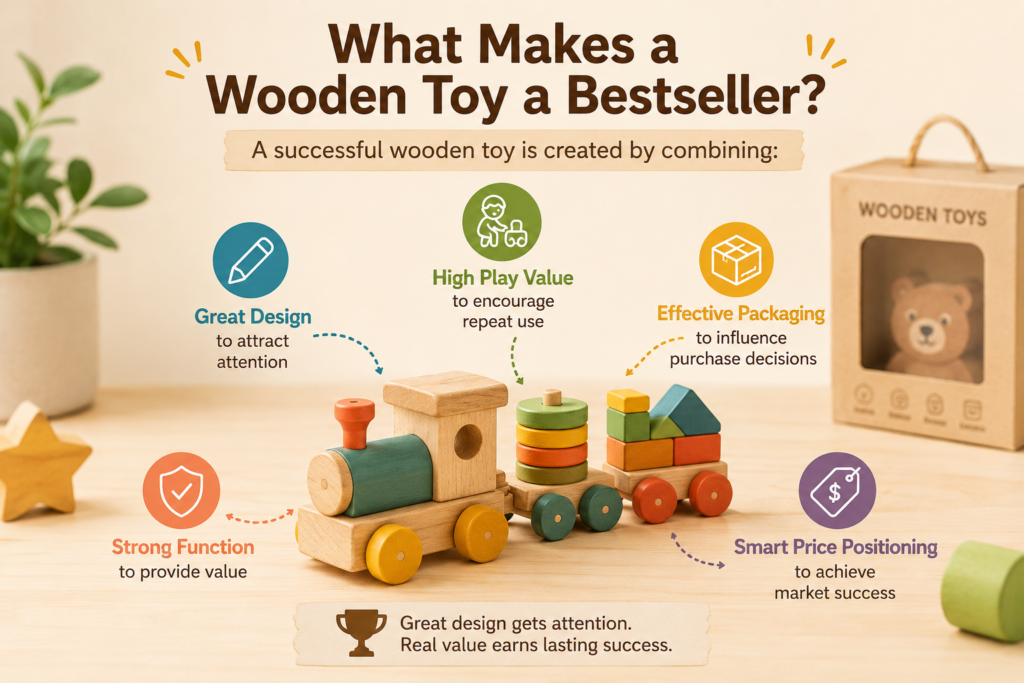
Conclusion: What Makes a Wooden Toy a Bestseller?
A successful wooden toy is created by combining:
Great Design — to attract attention
Strong Function — to provide value
High Play Value — to encourage repeat use
Effective Packaging — to influence purchase decisions
Smart Price Positioning — to achieve market success
For brands and retailers, understanding these factors can help identify products with stronger commercial potential and build a more competitive wooden toy collection.
The future of wooden toys belongs to products that combine creativity, safety, quality, and meaningful play experiences.
With over 20 years of experience in wooden toy design and manufacturing, we have always been dedicated to providing our customers with the most suitable solutions and high-quality products.
Please feel free to contact us anytime — we are committed to becoming your most trusted supplier and long-term partner.
E-mail: sales17@tookytoy.com