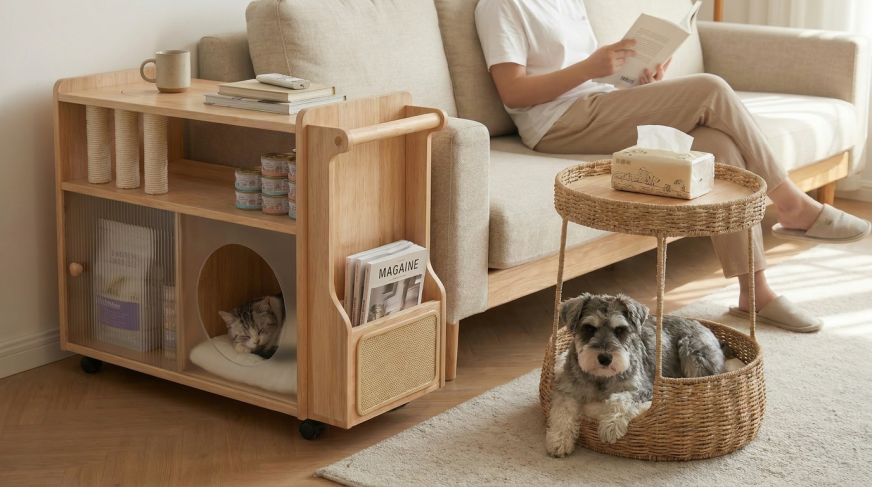
As the pet industry continues to develop, pet products are increasingly becoming part of the home environment rather than merely serving a single functional purpose. For importers, distributors, wholesalers, retailers, and shop owners already selling wooden toys and children’s products, this creates a clear opportunity: adding a pet-focused wooden furniture line to your existing range.
As the concept of “humans and pets living together” continues to gain popularity, the pet products market is expanding—and it is moving from functional accessories into the home. The global pet furniture market is projected to grow from USD 4.27 billion in 2026 to USD 5.71 billion by 2031 (CAGR 5.98%), led by North America and Europe. Behind this growth is a shift in consumer mindset: pet owners increasingly want products that support co-living, comfort, and home aesthetics.
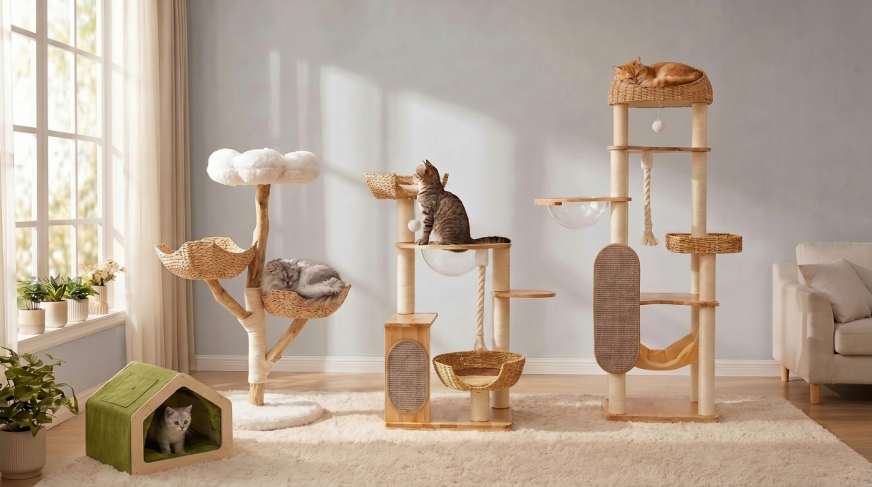
For buyers already working with wooden products, this is a natural adjacent category. Wood is already one of the key materials in pet furniture, especially for cat houses, cat trees, and litter cabinets. The market is ready for new, well-designed wooden pet products—and for retailers and distributors who can bring them to customers first.
1. Why Wooden Pet Furniture?
Wood has long been one of the mainstream materials used in pet furniture, particularly for products that require a stable structure and prioritize sustainability.
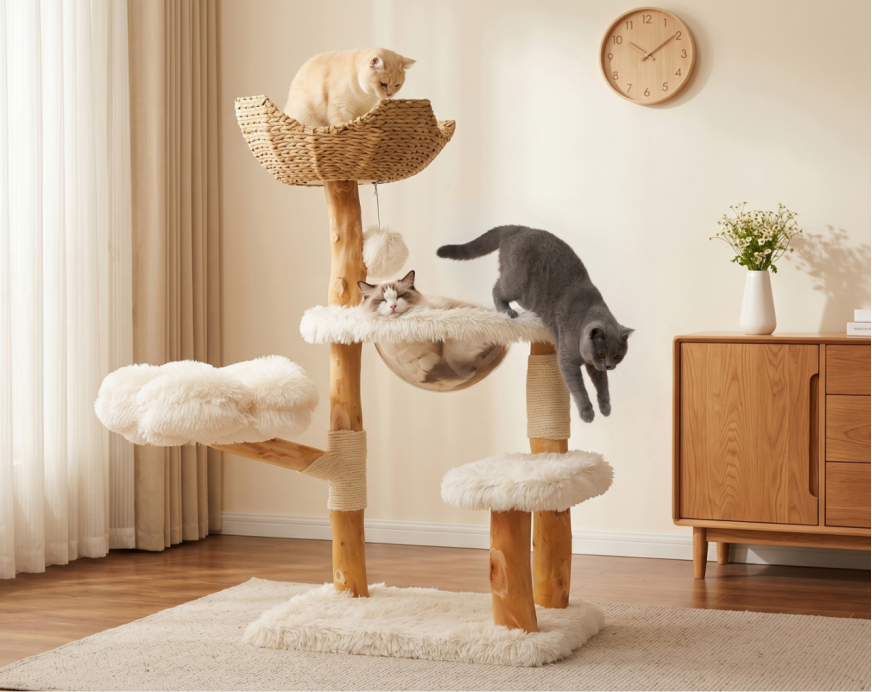
There are several reasons for this:
- Structural stability: Wood provides a solid structure for products such as cat houses and climbing furniture.
- Home-friendly appearance: Natural wood and painted wood surfaces can be integrated into a wide range of interior styles.
- Design flexibility: Wood can be cut, assembled, painted, engraved, or combined with other materials to create different designs.
- Long-term usability: Properly designed wooden furniture can be relatively durable and suitable for repeated daily use.
- Material considerations: Many wooden products can be made from renewable or recyclable materials, depending on the wood source, coatings, adhesives, and overall construction.
This makes wood particularly suitable for pet furniture that needs to function as part of the home rather than simply as a standalone pet accessory.
2. Three Product Categories to Consider
A pet product extension does not need to cover the entire pet-care market. A more focused approach can start with several furniture categories that naturally fit wooden manufacturing—and that already have clear demand from pet owners.
Cat Houses
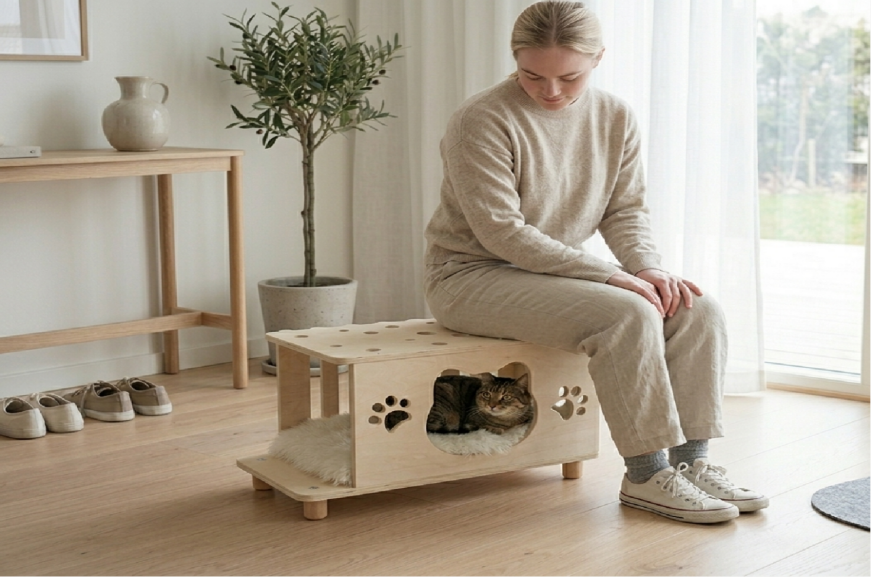
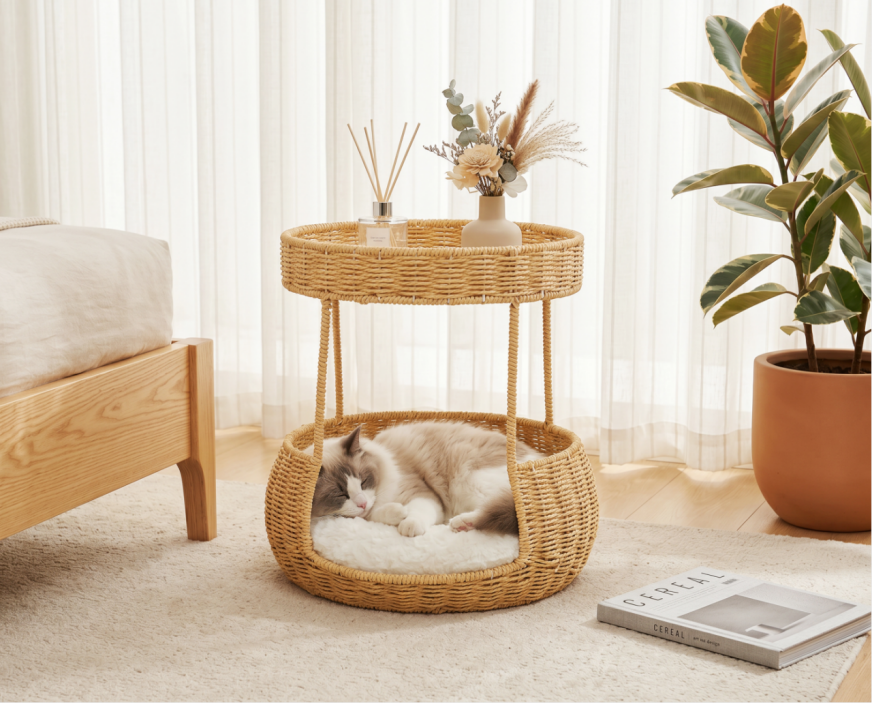
Cat houses provide pets with a private space for resting, hiding, and sleeping.
From a product-development perspective, they offer considerable flexibility in terms of shape and construction. Simple enclosed structures can be developed into more decorative furniture pieces, while modular designs can provide additional opportunities for customization.
Cat Trees and Climbing Structures
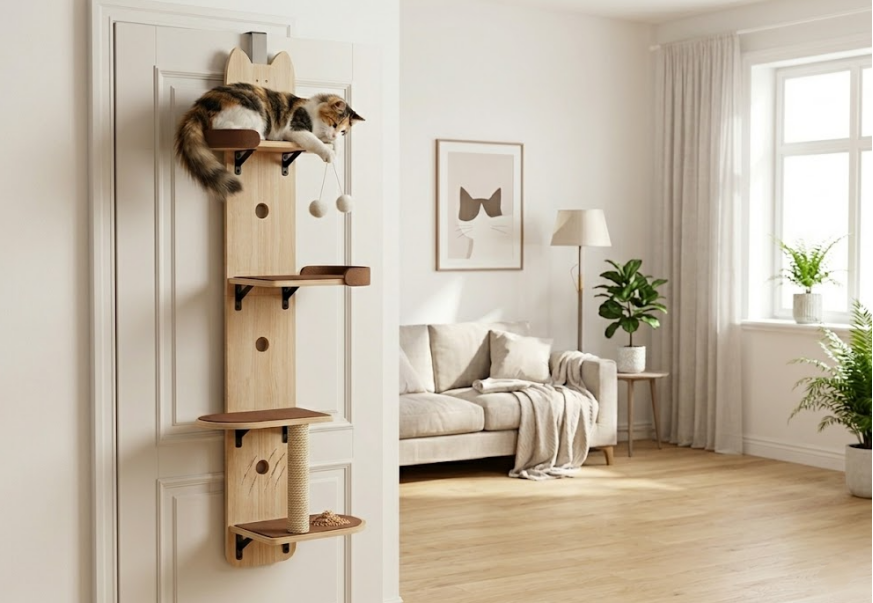
Cats naturally enjoy climbing, jumping, and observing their surroundings from elevated positions. This makes cat trees and climbing structures another natural application for wooden construction. Wooden frames can provide the main structural support, while other materials such as sisal rope, cushions, or fabric can be incorporated where necessary.
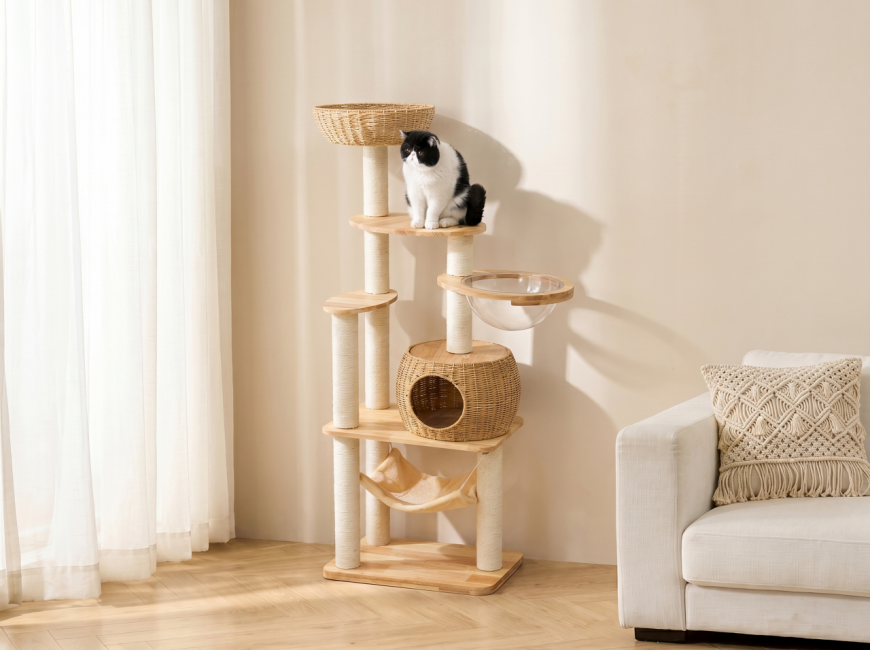
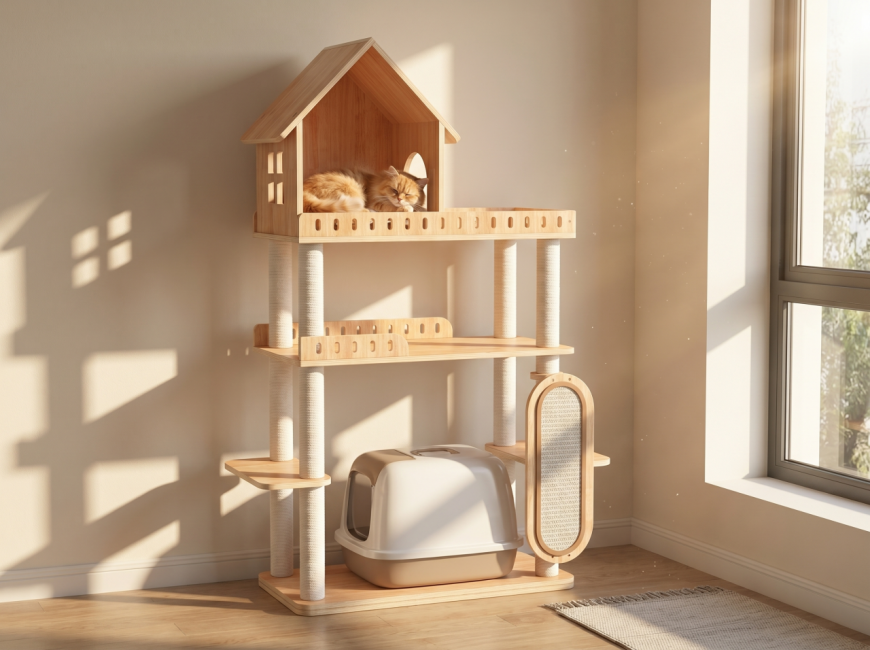
In Europe, the market shows a strong preference for sustainable products, with natural wood cat trees experiencing a 20% year-on-year increase in sales. The design can also be adjusted according to available space, making this category suitable for different types of homes.
Cat Litter Cabinets
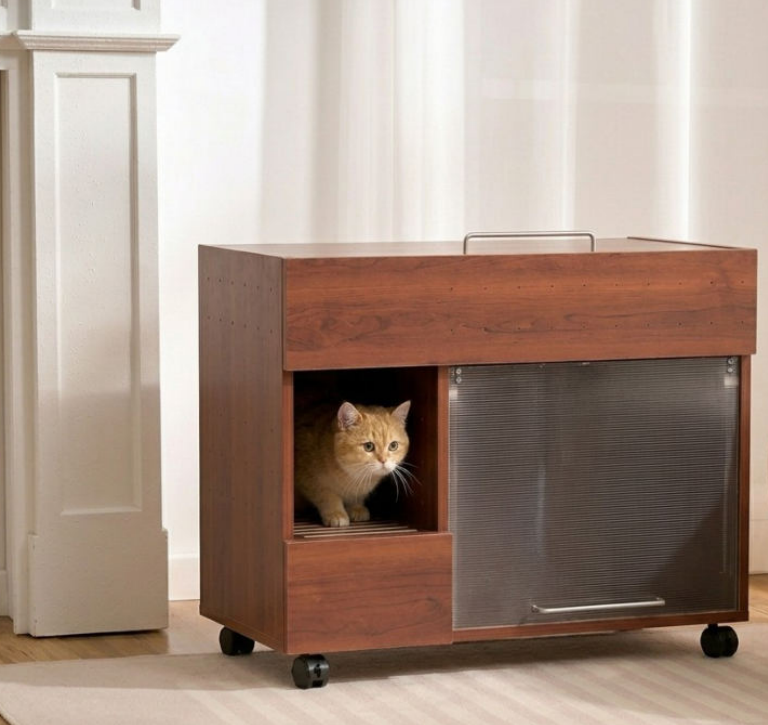
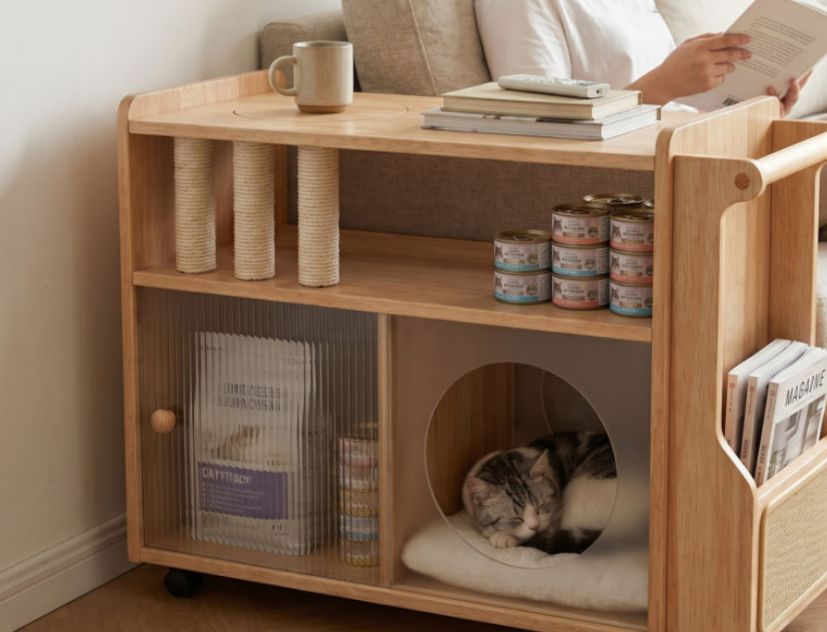
Cat litter cabinets are a more furniture-oriented product category. Their main purpose is to conceal the litter box while maintaining ventilation and providing convenient access for cleaning. Because these products are closely integrated with household furniture, appearance and dimensions can be particularly important. In the litter box furniture segment, online stores led the distribution channel with a 51.2% share in 2025, and North America accounted for the largest regional share at 38.4% . This creates opportunities for designs adapted to different room layouts and storage requirements.The semi-enclosed design is particularly well-suited for small animals that value their privacy.
3. The Advantage of Customizable Dimensions
From a product-development and buying perspective, it helps to understand what a complete wooden pet furniture range usually covers. A well-structured line does not need to offer every possible item; instead, it focuses on the categories that combine woodworking feasibility, retail appeal, and clear pet-owner demand.
One of the most interesting characteristics of wooden pet furniture is the possibility of dimension customization.
Unlike many standardized pet accessories, furniture products need to work within the physical space available in a customer’s home. A product designed for a large house may not be suitable for a small apartment.
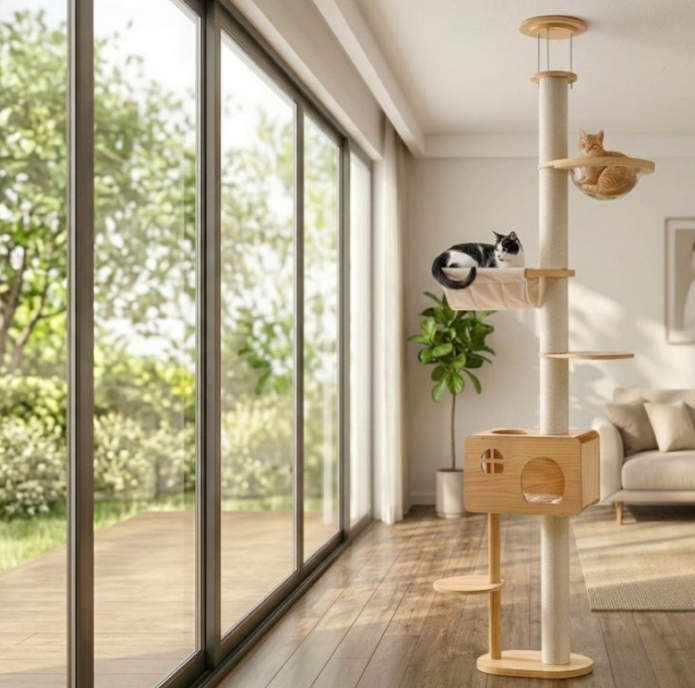
For example, a cat house or litter cabinet can potentially be adjusted according to:
- Available floor space
- Wall or corner dimensions
- Ceiling height
- Storage requirements
- Cat size and number of pets
- Placement within the home
This creates a different product-development model from conventional mass-market pet accessories. Instead of offering only one fixed specification, manufacturers can consider several size options or semi-customized dimensions.
For companies with existing woodworking capabilities, this type of customization may also be relatively compatible with their current production processes.
4. A Broad Potential Consumer Base
Pet furniture also has a relatively broad potential customer base. The target market is not limited to a particular age group or a specific type of consumer. Pet owners can range from young people living in apartments to families living in larger houses.
At the same time, pet ownership increasingly overlaps with home decoration and lifestyle consumption. Some consumers are looking for products that serve their pets’ needs without creating a visual mismatch with their homes. A 2025 Harris Poll revealed that 67% of United States pet owners created dedicated spaces in their homes for their pets, and Generation Z pet owners spent an average of USD 6,103 annually per pet. In the UK, 2024 e-commerce data showed a 2.62% conversion rate and an average order value of USD 124 for pet care products .
This means that product positioning can extend beyond “pet supplies” toward functional home furniture for pet owners. However, the actual market potential will naturally vary by country, price level, pet ownership rate, and distribution channel. Market research should therefore be carried out before investing heavily in a new product line.
5. A Different Testing and Compliance Environment
Another factor worth considering is the difference in product testing requirements.
Wooden children’s toys are generally subject to relatively demanding safety requirements because they are products intended for children. Depending on the target market, manufacturers may need to consider requirements relating to mechanical and physical properties, flammability, migration of certain elements, chemical substances, and other safety considerations.
Pet furniture is subject to a different regulatory environment. For many basic wooden pet-furniture products, the compliance requirements can be less complex than those applicable to children’s toys. However, this should not be interpreted as “no testing is required.”
For buyers, this means the compliance path is generally simpler than for children’s toys—but still requires attention to material safety, paints and coatings, structural stability, sharp edges, load-bearing capacity, and packaging and labeling. The key difference is that the compliance framework is generally more closely related to the product’s intended use and market than to children’s toy safety standards.
6. Environmental Considerations
Wooden pet furniture can also provide an opportunity to explore more environmentally conscious product development.
Wood is a renewable material when sourced responsibly, and certain wooden components can be reused, recycled, or disposed of more easily than some composite or plastic alternatives.
However, the environmental profile of a product should not be judged by the word “wood” alone. The complete product needs to be considered, including:
- Wood sourcing
- Adhesives
- Paints and coatings
- Plastic components
- Metal hardware
- Fabric and rope
- Packaging
- Product lifespan
For example, a product made primarily from wood but combined with large amounts of non-recyclable materials may have a very different environmental impact from a product designed with material separation and recyclability in mind.
Therefore, sustainability should be treated as a product-development consideration rather than simply a marketing claim.
7. Why This Category Works for Importers, Wholesalers and Retailers
For buyers already experienced in wooden toys and children’s products, adding a pet-furniture line offers several practical advantages:
- Existing supply chain: You already work with wooden product suppliers, so adding pet furniture does not mean starting from zero.
- Adjacent customer base: Customers who buy wooden toys for their children are often the same people who own pets and care about home aesthetics.
- Clear product categories: Cat houses, cat trees, and litter cabinets are easy to understand, display, and merchandise.
- Growing demand: The market is expanding, and consumers are already looking for home-integrated pet furniture.
- Different compliance path: The regulatory framework is different from children’s toys—generally simpler, though still requiring attention to material safety, structural stability, and labeling.
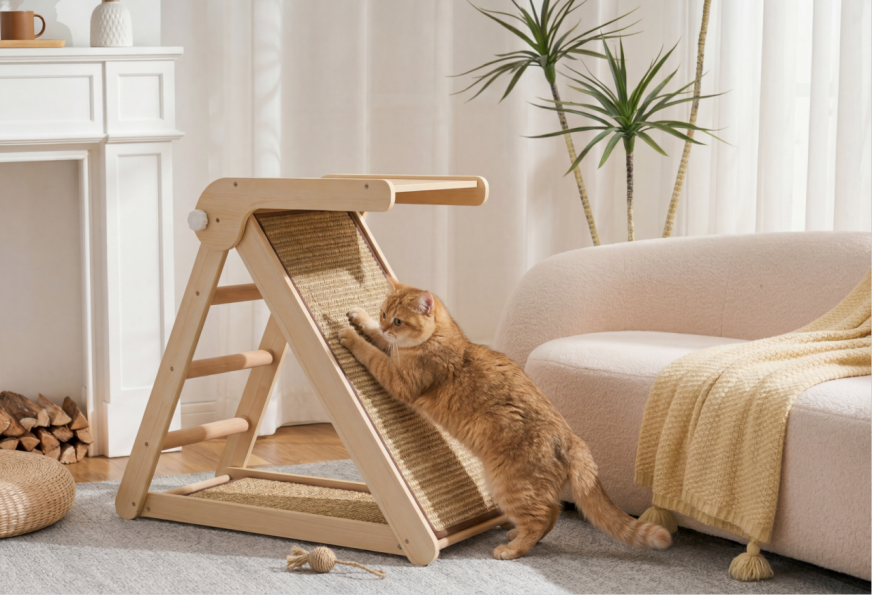
At the same time, pet furniture introduces new requirements that should not be underestimated. Load-bearing structures, animal behavior, cleaning requirements, odor control, scratch resistance, and product stability all need to be considered during selection.
The most practical approach is to treat pet furniture not simply as another product category, but as a complementary extension of your existing wooden product range. For buyers looking to diversify beyond traditional wooden toys, it is a segment worth evaluating based on market demand, production capabilities, and the specific requirements of your target customers.
Conclusion
For importers, distributors, wholesalers, retailers, and shop owners already selling wooden toys, a pet-focused product line is a relatively natural adjacent category.
Cat houses, climbing structures, and litter cabinets all have clear connections with woodworking, while their dimensions can potentially be adapted to different household environments. The consumer base is broad, and the testing and compliance framework is generally different from—and in many cases less demanding than—that of children’s toys.
At the same time, the category has its own challenges. Product safety, structural strength, animal behavior, cleaning, durability, and market-specific requirements all need to be considered carefully.
The most practical approach may therefore be to treat pet furniture not simply as another product category, but as a complementary extension of your existing range. For buyers looking to diversify beyond traditional wooden toys, it is a segment worth evaluating based on market demand, production capabilities, and the specific requirements of your target customers.
As the pet home category continues to evolve—with standards being formalized, consumer expectations rising, and new product models emerging—the window for buyers to establish a credible presence is open. Those who move early, with products designed specifically for pet behavior and the modern home, will be well positioned to build a differentiated advantage in this growing market.