Have you ever watched a one-year-old try to stack a ring, only to launch it across the room like a tiny frisbee?
Have you ever seen a parent stare at a mountain of plastic, battery-powered toys and whisper in despair, “Why does this one need batteries?”
And have you ever, as a wholesaler or retailer, asked yourself: Which toy will sell consistently, build trust with my customers, and never come back as a return?
I have. Every single day.
As a distributor who cares about long-term margins, brand reputation, and repeat business, I don’t just look at “cute.” I look at developmental value. I look at safety. I look at whether this toy will still be relevant in five years, even twenty years.
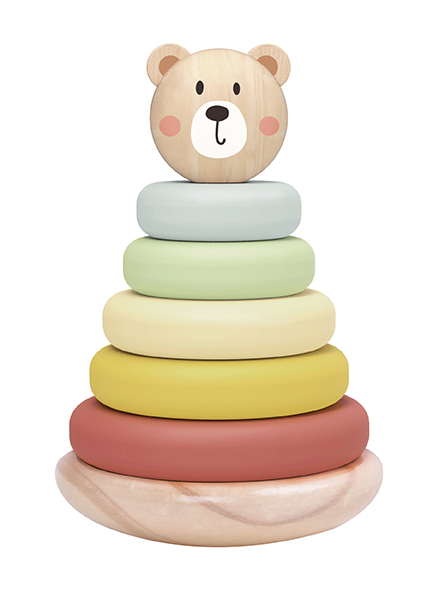
And that relentless pursuit is exactly why I keep coming back to wooden stacking ring.
In short: wooden stacking rings are simple, timeless, developmentally powerful, and commercially stable.
They subtly build fine motor skills, cognitive growth, and sensory development. They have no batteries. They rarely break. They rarely go out of style. And best of all? Parents understand their value instantly.
That combination is rare than you think. Let’s peel back the layers and look at why this classic toy is the gift that keeps on giving – for the child, the parent and your bottom line.
Why Do Early Childhood Experts Recommend Stacking Toys?
We all know stacking rings are “good for development.” But what does that actually mean in a toddler’s brain?
According to the Centers for Disease Control and Prevention (CDC), fine motor skills — like grasping, placing and coordinating hand movements — are key milestones in early childhood development. (Source: CDC Milestones)
Stacking rings are not just a toy, they are a finely tuned workout for tiny hands. To succeed, a child must:
- Grip the ring with urpose.
- Aim the ring onto the wobbling post carefully.
- Adjust their wrist angle real-time.
- Control the perfect amount of pressure.
- Release with pinpoint precision.
That’s a complex sequence for a one-year-old! And unlike flashy digital toys that do the “performing”, stacking rings require the child to perform. That difference matters.
Do Stacking Rings Really Support Brain Development?
Short answer: Yes. Longer answer: Absolutely.
The American Academy of Pediatrics (AAP) emphasizes that open-ended play supports cognitive development and problem-solving skills.
(Source: AAP Publications)
When a toddler experiments with stacking, they are not just playing, they are running a mental laboratory:
- They learn about size sequencing
- They explore balance and gravity
- They test cause and effect
- They practice spatial reasoning
If the tower falls? That’s not failure. That’s physics class. Unlike electronic toys that give instant rewards, stacking rings encourage persistence. Parents love that. Retailers love that parents love that.
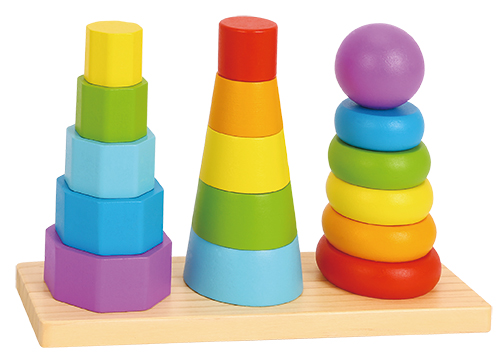
Why Are Parents Moving Back to Wooden Toys?
Here’s something I’ve noticed in market trends across the US and Europe.
Parents are increasingly concerned about:
- Screen time overload
- Plastic waste and its environmental impact
- Overstimulation from noisy, flashing gadgets
- Chemical safety of materials that end up in their child’s mouth
As Statista reports, the global market for educational toys continues to grow steadily, driven by parental focus on early learning and sustainability.
(Source: Statista)
Wooden toys sit perfectly at the intersection of all these concerns. They feel warm and natural. They look calm and intentional on a nursery shelf. They align with Montessori-inspired parenting styles. And let’s be honest — they look beautiful.
A stacking ring set on a neutral nursery shelf? That’s not just a product, that’s lifestyle marketing gold.
Why Are Wooden Stacking Rings Commercially Smart for Retailers?
Now let’s talk business. As a buyer, every purchasing decision comes down to four core question. And Stacking rings score a perfect “yes” on all of them.
1. Is it Evergreen?
Stacking rings have been around for decades. They are not trend-driven. They don’t rely on movie licenses. They don’t expire when a cartoon ends. That gives you inventory stability.
2.Is it Safe?
Parents today check for certifications. In the US, compliance with ASTM F963 toy safety standards is critical. In Europe, EN71 testing is mandatory. Wooden stacking rings — when properly manufactured — easily meet these standards. Fewer components mean fewer failure points, leading to a lower return rate and significantly reduced complaint risk. That’s peace of mind for you and your customers.
3.Is it Giftable?
Let’s talk psychology. In parents’ minds, wood instantly translates to
Durable
Sustainable
Educational
Safe
This creates a high perceived value. Even when priced slightly higher than plastic alternatives, wooden stacking rings rarely trigger price resistance. Because parents don’t compare them to plastic toys. They compare them to “cheap toys.” That positioning helps margin.
4.Does it Return Well (Low Defect Rate)
From a trading perspective, stacking rings are:
Lightweight
Compact
Easy to pack flat
Low damage rate
That means better container utilization, lower freight cost per unit, fewer post-sales headaches. And for small to mid-sized retailers, that’s crucial.
Are Stacking Rings Only for Babies?
This is a question I used to underestimate. But here’s the interesting part: different designs dramatically expand your target age range.
- Classic ring stackers: Perfect for 6–24 months.
- Shape-sorting stacking hybrids: Engage children up to 3 years.
- Creative balance stacking variations: Appeal to even older preschoolers.
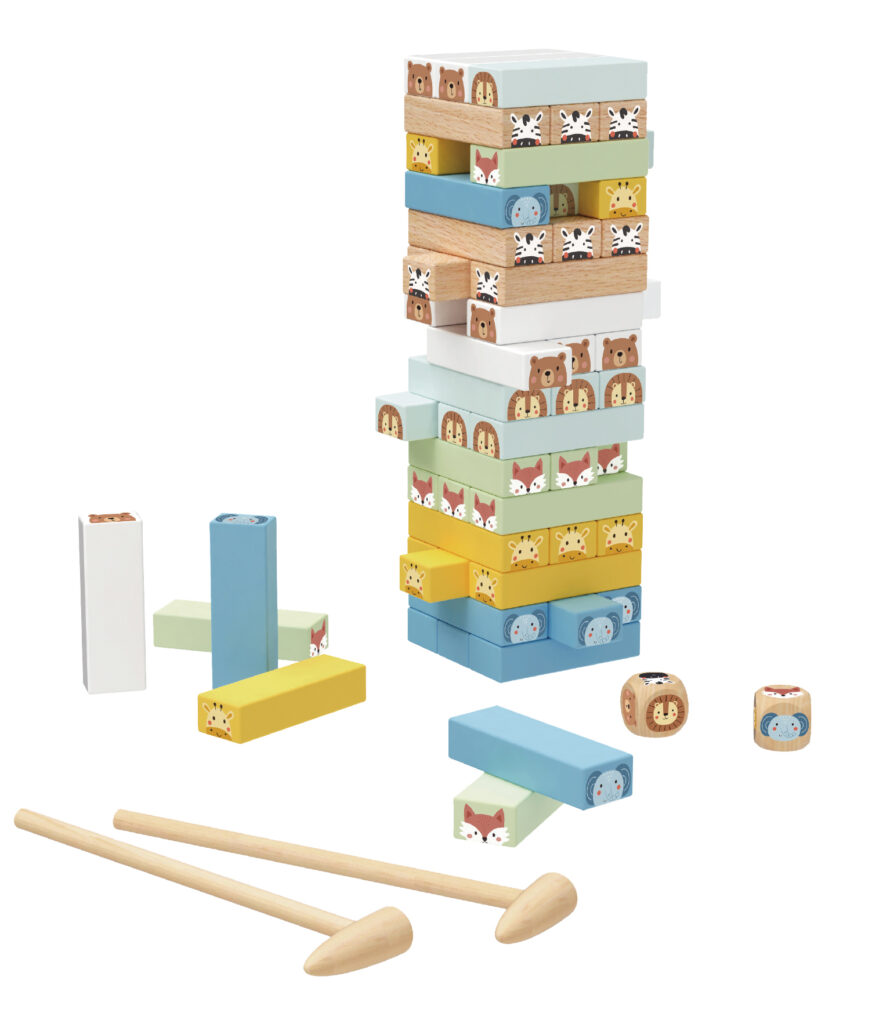
With minor design innovation, one SKU can stretch across multiple developmental stages. That improves sell-through rates and dramatically reduces dead stock risk.
Do They Still Work in the Age of Tablets?
Yes. In fact, their value has never been higher.
The World Health Organization (WHO) recommends limiting screen time for children under 2 years old.
(Source:WHO)
Parents are actively searching for alternatives. Non-digital toys are no longer “old-fashioned.” They are now viewed as intentional, healthy choices. That’s a powerful shift.
What Makes a High-Quality Wooden Stacking Ring Set?
Now we get practical. If I’m sourcing, I check:
- FSC-certified wood
- Smooth sanding (no splinters, ever)
- Non-toxic water-based paint
- Colorfast testing
- Stable base design
- Proper ring thickness for toddler grip
If those boxes are checked, I know I can confidently market it as a premium, and trustworthy product. And confidence sells.
Conclusion
Wooden stacking rings are not flashy. They don’t sing. They don’t dance. They don’t blink.
But they develop real skills. They foster genuine parent-child connection. They build parent trust. They sell steadily.
And for a retailer who values long-term growth over short-term hype? That’s exactly the kind of toy worth stacking up on.