When children reach the age for early math learning, many parents face the same dilemma:
“Should I start teaching numbers and counting early?”
“But will teaching too early make them hate math?”
The good news is — children don’t need drills to understand mathematics. They just need to play.
Especially when playing with warm, safe wooden toys, children naturally build their understanding of numbers through touching, stacking, comparing, collecting, and exploring. Without realizing it, they gradually form number sense — the mathematical intuition that becomes the foundation for future learning.
Let’s explore how wooden toys can help kids unlock number sense effortlessly and joyfully.
What Is Number Sense — And Why It Matters More Than Memorizing Numbers
Many people think number sense means counting quickly or doing addition and subtraction early.
But number sense is much richer than that — it’s a child’s intuition toward quantity and mathematical relationships.
A strong number sense grows from four abilities, and each of them can be nurtured through play:
1️⃣ Quantity Perception — “More vs. Less”
Before children understand numbers, they must first grasp quantity.
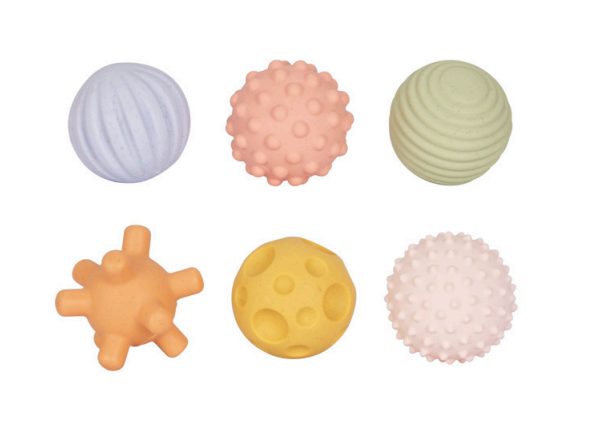
When playing with a silicone ball set, a child may notice:
“The left hand has fewer balls, the right hand has more.”
This insight — far more valuable than repeating “1, 2, 3” — is the beginning of number sense.
2️⃣ Number Recognition — Connecting Symbols With Quantity
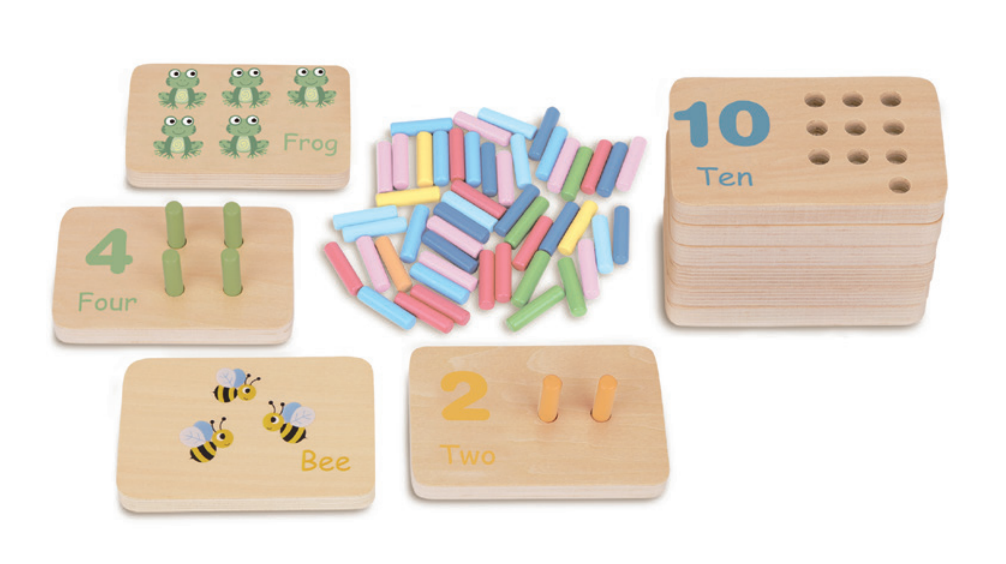
Children don’t just need to see the number“3”— they need to feel that “3 means three objects.”
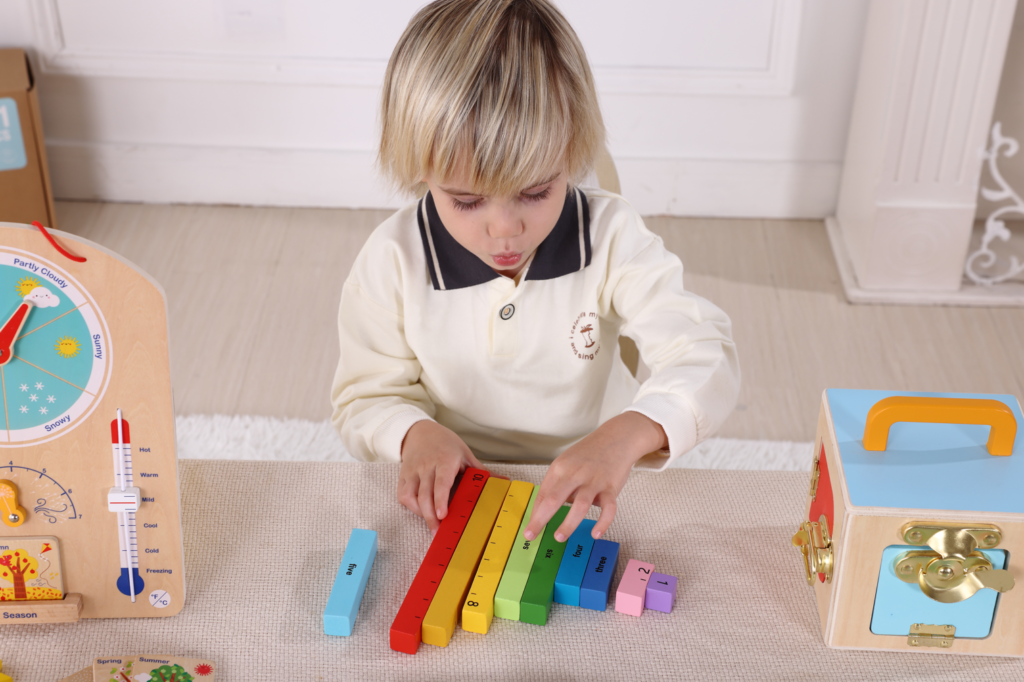
Matching number cards with the corresponding number of wooden pieces helps make this connection intuitive.
3️⃣ Arithmetic Thinking — Addition and Subtraction Through Action
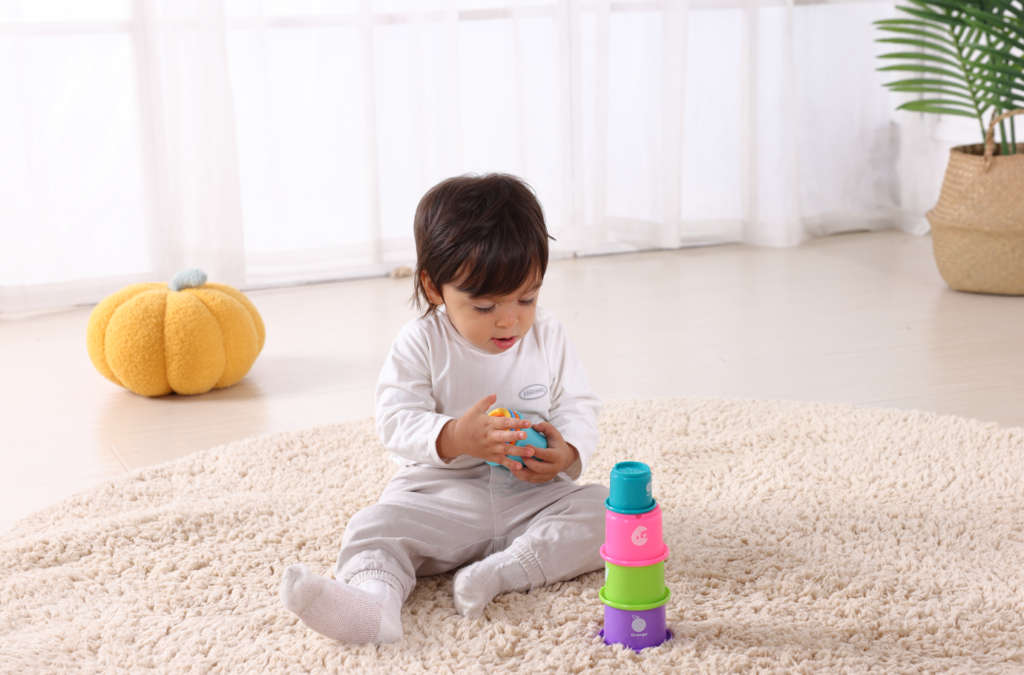
When a child stacks 3 cups on 1 cup and sees it becomes 4,
or removes 2 blocks and sees the tower gets shorter,
they are doing math with their hands — they discover that addition increases and subtraction decreases.
4️⃣ Logical Application — Classifying, Comparing, Conserving
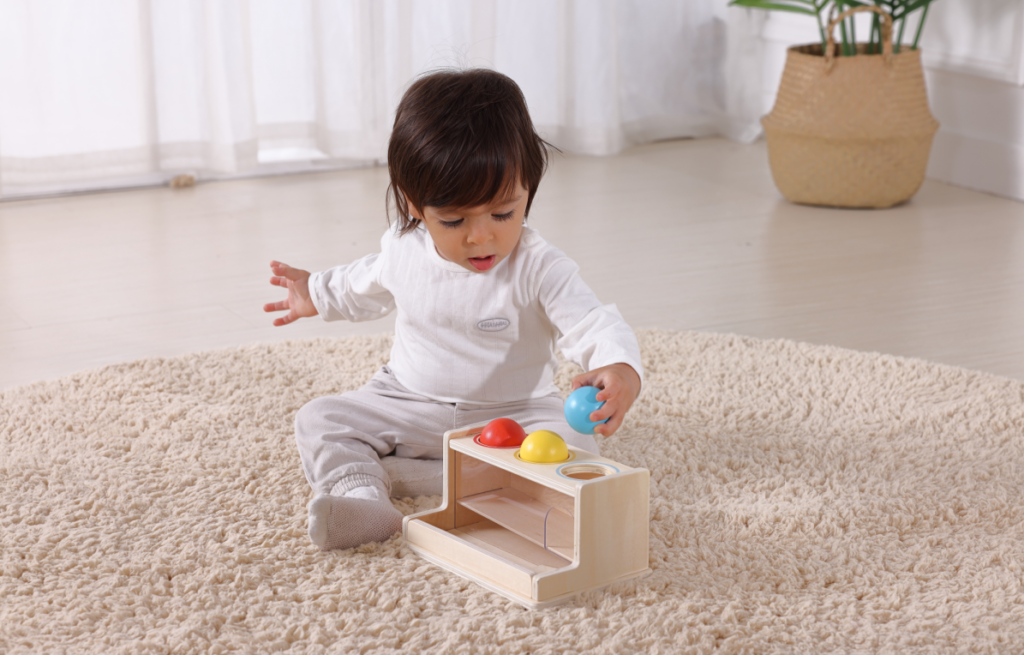
Sorting wooden pieces by color and then counting them-or learning that a ball entering a box doesn’t disappear-helps children understand comparisons and quantity conservation, a crucial early math concept.
The beauty of wooden toys:
They turn abstract math concepts into something children can touch, hold, and play with-making learning feel like pure fun.
Four Wooden Toy Play Ideas That Inspire Natural Number Sense
You don’t need deliberate “math lessons.”
With the right play setup, learning happens on its own.
✨ 1. Sensory Play — “Hearing, Touching, Seeing Quantity”
Children love sensory feedback.
Handing them one ball at a time and saying, “Here are two more balls,” helps them associate math words with real quantity.
Next step: let them follow instructions-“Put 3 balls in the box.”
From receiving → acting → understanding.
✨ 2. Stacking and Building — “Counting While Creating”
While building houses or bridges with wooden blocks, ask naturally:
“How many red blocks did you use?”
“If we add two more, how many will we have?”
If the tower collapses — celebrate the opportunity:
“Three blocks fell down — how many are still standing?”
Suddenly, arithmetic becomes part of storytelling.
✨ 3. Classification and Matching — “Sorting, Comparing, Understanding Patterns”
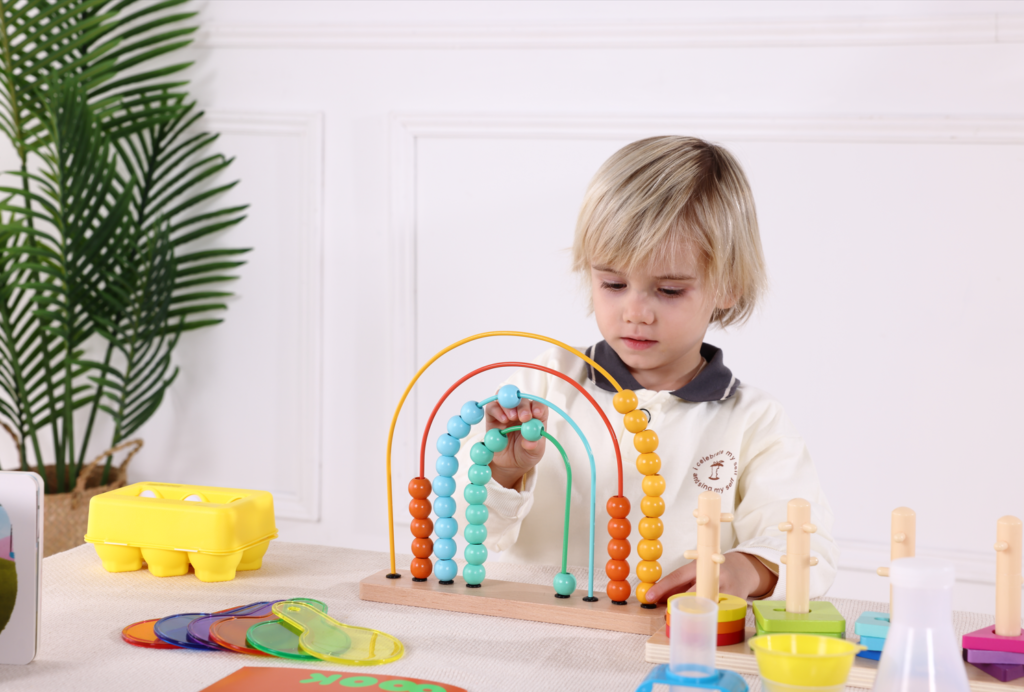
A rainbow abacus or wooden beads can be sorted by color:
“5 red beads, 4 blue beads — so which color has more?”
Through grouping and comparing, children experience quantity differences, patterns, and counting order.
✨ 4. Collaborative Play — “Applying Math in Real Situations”
Competition and teamwork make learning lively:
Who can place the most balls in the track?
Parent counts while child feeds the balls
Child announces how many balls went in and out
The excitement deepens mathematical thinking.
Three Simple Tips for Parents to Upgrade Everyday Play Into Early Math Learning
✨ 1. Use mathematical language
Replace vague words:
❌ “Give me more blocks”
✔ “Give me 2 blocks”
This builds vocabulary and understanding effortlessly.
✨ 2. Explore multiple play methods with the same toy
More play, more learning:
Stacking cups ➜ counting ➜ sorting colors ➜ pretend pouring
Beads ➜ counting ➜ pattern sequencing ➜ comparing amounts
✨ 3. Let children control the pace
Number sense can’t be rushed — discovery is key.
If a child miscounts, don’t correct immediately.
Instead, demonstrate with toys and let them discover the answer themselves.
Conclusion — Let Number Sense Bloom Quietly Through Play
For children, math doesn’t begin in textbooks.
It starts in moments like:
“How many blocks do I need?”
“Who has more beads?”
“How many pieces are left if I take one away?”
Wooden toys — free from lights and electronics — provide a pure and focused environment where children feel mathematics with their hands.
If you want your child to love math instead of fearing it, the best approach isn’t early drilling —
but quality play, shared joy, and warm interaction.
➡ Play together.
➡ Build together.
➡ Count together.
And number sense will naturally grow — quietly, confidently, and joyfully.