In our daily work, we often encounter the following situations:
When customers receive samples or color boxes, their first reaction is to focus on the product’s design, color, and how to use it, while they only glance at the warnings, logos, and symbols on the back of the packaging.
But for us, these “small icons and words” are important things that we repeatedly check and verify every day.
Today, we’d like to share our practical experience with you some warnings and recycling symbols that you often see on toy boxes but may not really understand .
1. Why do we attach so much importance to this information on the color box?
In the export market, color boxes are not just “boxes for toys”.
It’s more like a product’s “identity card,” and also an important window for regulators, retailers, and parents to understand the product.
For parents, it serves as a basis for judging whether a toy is safe, age-appropriate, and reliable.
For overseas buyers, it’s crucial for the smooth customs clearance, product listing, and long-term sales of their products.
For us suppliers, it directly impacts brand reputation and the stability of our partnerships.
Even if the product itself is fully qualified, if the packaging information is not standardized, it may be required to make rectifications during random inspections, or even face the risk of being removed from shelves.
II. Why do we need to clearly write down those most common warning statements?
The “WARNING” warning message isn’t actually meant to scare people.
In the European and American markets, one of the most common warnings is:
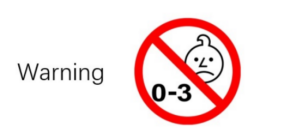
WARNING: CHOKINNG HAZARD — Small parts. Not for children under 3 years.
This does not mean the product is unsafe, but rather that the boundaries of its use are clearly communicated:
If a toy contains small parts, it must be clearly labeled as unsuitable for children under 3 years old.
Even for wooden toys, as long as there are detachable parts, we will strictly label them in accordance with regulations.
This is about being responsible to the children, and also about being responsible to the brand.

The “0-3 prohibited” symbol must appear simultaneously with the text.
Many customers ask, “Since a warning message has already been written, is this red 0-3 icon still necessary?”
The answer is: Yes, they are needed, and they must be used simultaneously.
The purpose of this symbol is to allow parents to determine whether a product is age-appropriate at a glance through the graphic, so that there will be no misunderstanding even if the languages are different.
Third, those often-overlooked “signs” are actually very important.
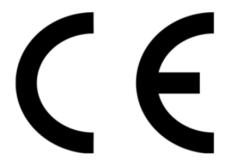
CE Mark: A passport to the EU market
The CE mark is not a “quality certification,” but rather a manufacturer’s declaration of compliance with EU regulations.
Toys sold in the EU must have the CE mark correctly displayed on their packaging, with specific requirements regarding size, proportion, and placement. This is one of the first things retailers and regulators will check.
UKCA Mark: New Requirements for the UK Market
Since Brexit, UKCA has become an important symbol for entering the UK market.
For wooden toys exported to the UK, we will arrange the use of CE and UKCA appropriately according to the sales market to ensure that the packaging complies with the latest regulatory requirements and avoid unnecessary compliance risks for our customers in the UK market.

The Green Dot logo: a symbol of environmental responsibility.
Many people mistakenly believe that this symbol means “recyclable”.
In fact, it means that the company has participated in the local packaging recycling system and assumed corresponding responsibilities for the recycling system.
It reflects more of an environmental responsibility mechanism than simply material properties. This logo is very common in the European market and is frequently noticed by retailers.

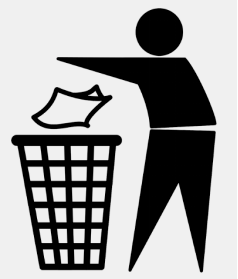
“Tidyman” logo: an advocacy for environmental protection.
It doesn’t convey regulatory requirements, but rather an environmental advocacy: reminding consumers to properly dispose of waste after using packaging and to keep the environment clean.
Although it’s not mandatory, in many markets, such details make a brand appear more friendly and responsible.
IV. The Environmental Logic Behind Recycling Labels
Recycle the triangular arrow (Mobius Loop)
This symbol indicates that the packaging material is recyclable, but it does not mean that it is “made from recycled materials”.
If it contains numbers or letters, it indicates the specific type of material, making it easier for the local recycling system to classify it.

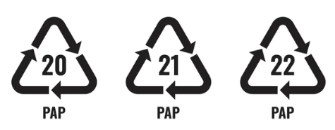
Material codes (e.g., PAP)
On cardboard boxes, we often see: PAP 20 / PAP 21 / PAP 22. These correspond to different types of paper and paperboard, and are particularly common in the European market.
PAP 20 refers to corrugated cardboard, which is the shipping outer box or master carton we usually see.
PAP 21 represents non-corrugated cardboard, which has a smooth surface and moderate rigidity, making it ideal for high-quality printing.
PAP 22 refers to plain paper, commonly found in product manuals , inner cards , labels, and hang tags.
FSC mark (if applicable)
As a wooden toy company, we also attach great importance to the sustainability of our wood sources.
The FSC logo not only represents responsible forest management, but is also increasingly recognized by environmentally conscious parents and buyers.
V. Why are we willing to spend time on these “details”?
From the perspective of long-term cooperation, compliance is not a cost, but a guarantee.
It can reduce customs clearance and random inspection risks.
It allows retailers to put products on shelves with more confidence.
It gives parents more peace of mind when making a purchase.
It can help brands achieve long-term and stable development in different markets.
In our view, a truly excellent wooden toy should not only be fun, beautiful, and durable, but also withstand scrutiny and the test of time in these unseen areas.
Toys are products that accompany children as they grow, and every warning and every symbol on the packaging is a promise we make to children, parents, and our partners.As exporters of wooden toys, we firmly believe that doing these “small details” well is the greatest respect we can show to the market.