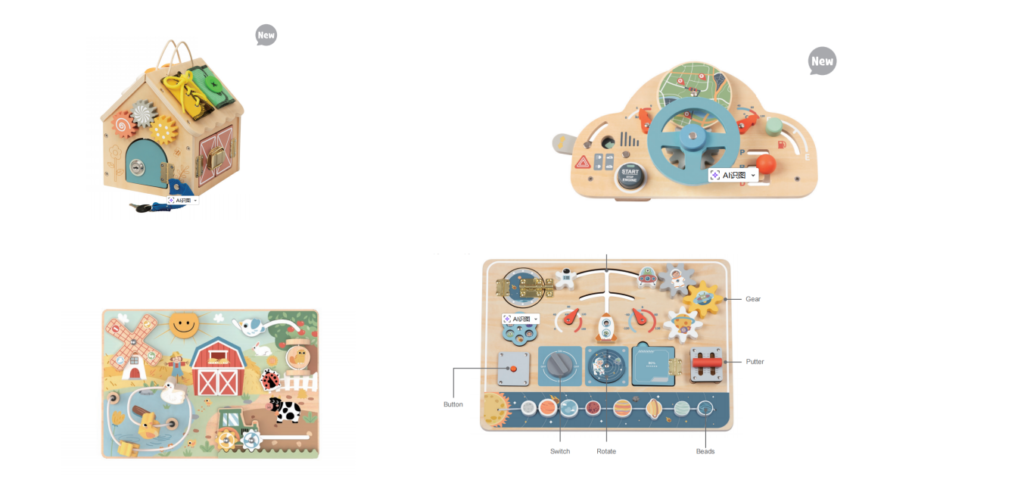
Have you got a fidgety toddler? A little one who can’t stop trying to open cupboards or loves pressing buttons? Nurture their natural curiosity with a busy board! In this article, we’ll answer your questions about the purpose and benefits of a busy board and take a deeper look at one of our favourite sensory delights.
What is a busy board?
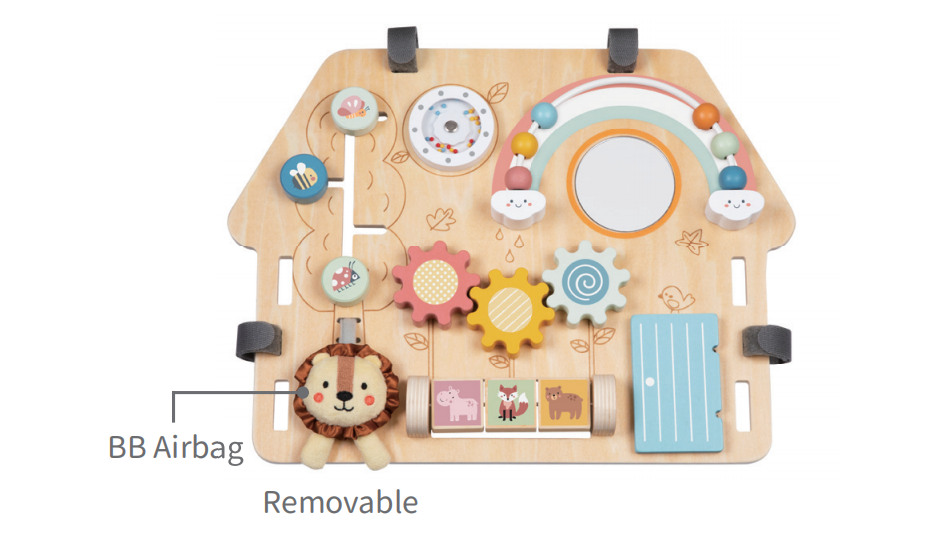
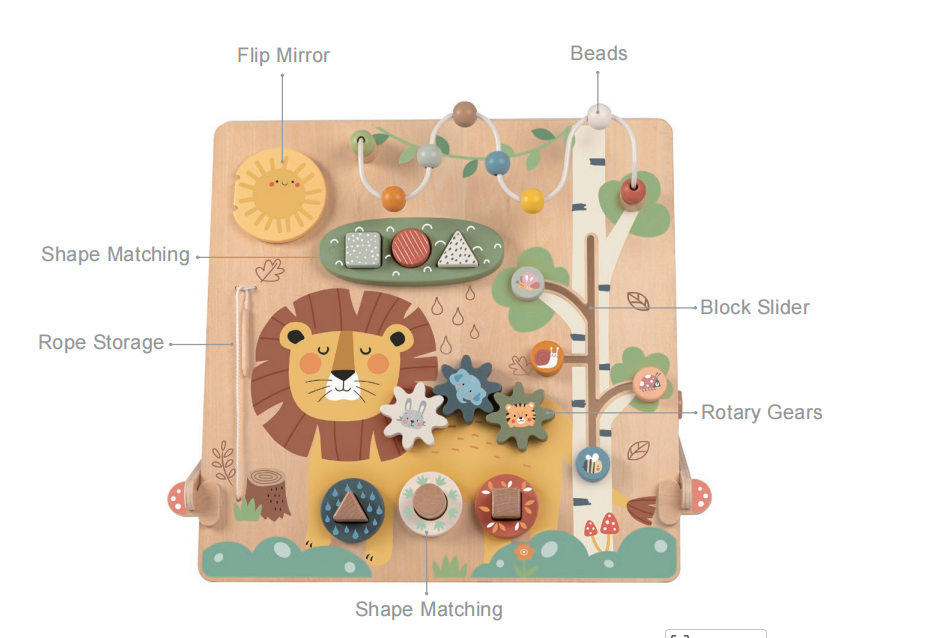
A busy board — also called an activity board or sensory board — is usually made from a sturdy wooden panel with a variety of objects attached that children can touch, push, pull, fasten, and turn. Common elements include:
Locks and latches
Buttons and zippers
Switches and knobs
Textured fabrics and gears
These boards give children a safe space to explore everyday objects that are often off-limits, like door locks or light switches, in a playful setting.
What is the best age for a busy board?
Busy boards are most commonly suitable for children between about 12 months and 3–4 years old.
6–12 months: Babies start exploring with their hands and can enjoy simple sensory boards with large, safe pieces and textures.
12–24 months (1–2 years): This is often considered the prime age for busy boards, as toddlers develop more precise motor skills and enjoy manipulating latches, buttons, zippers, and wheels.
2–4 years: Older toddlers can benefit from more complex activity boards that include puzzles, sorting activities, and multi-step challenges — and many boards grow with the child.
What is the purpose of a busy board?
A busy board isn’t just something to “keep a child entertained” — it’s a purpose-built educational toy that supports key developmental milestones in young children through hands-on, interactive play.
Here’s what a busy board does and why it matters:
1. Encourages Sensory Exploration
Busy boards typically include a variety of tactile elements — like buttons, switches, zippers, latches, and gears — that invite children to touch, manipulate, and explore. This variety of textures, motions, and sounds provides rich sensory stimulation, helping children process information through sight, touch, and sound in a playful way.
2. Builds Fine Motor Skills & Coordination
Turning knobs, flipping switches, and fastening fasteners require precise finger and hand movements. Practising these actions helps strengthen fine motor skills, improves hand-eye coordination, and builds the physical foundation for later activities like holding a pencil, dressing, or feeding themselves.
3. Boosts Cognitive & Problem-Solving Skills
Every interactive element acts like a tiny puzzle. Children learn cause and effect — for example, “if I turn this, it moves” — and develop cognitive skills like problem-solving and logical thinking as they figure
4. Encourages Independence & Confidence
Busy boards invite self-directed play, which helps children explore at their own pace. Mastering a new task — like opening a latch or buttoning a buckle — gives children a sense of achievement that builds self-confidence and autonomy.
5. Provides Healthy, Screen-Free Engagement
In an age where screens are everywhere, busy boards offer a screen-free alternative that keeps little hands and minds engaged in real, physical play — a way of learning that’s grounded in real-world interaction.
6. Mimics Real-Life Skills
Many busy board elements resemble everyday objects children see adults use (like light switches or zippers), giving them a safe and fun way to practice important “practical life” skills.
Still looking for something to keep your tot occupied? Explore our range of incredible toddler busy boards on our website.